Written by
Published on
January 5, 2026
Blog Post
Trends
An editorial overview of AI, CTV, streaming advertising, and CTV measurement priorities for 2026.
Connected TV (CTV) entered a new phase in 2025. While streaming became “TV” for many households, advertisers started evaluating CTV alongside search, social, and retail media.
From Waymark and AdWorldNews.com, the AI + CTV in 2026 report explores what changed, what’s new, and what successful teams are doing next. It combines current industry research with interviews across dozens of practitioners in streaming, CTV, measurement, and AI video creative.
The result is a real-time view of streaming advertising and the operating decisions that matter most in 2026.
Read the full AI + CTV in 2026 report.
Here are the main takeaways from the AI + CTV in 2026 report.
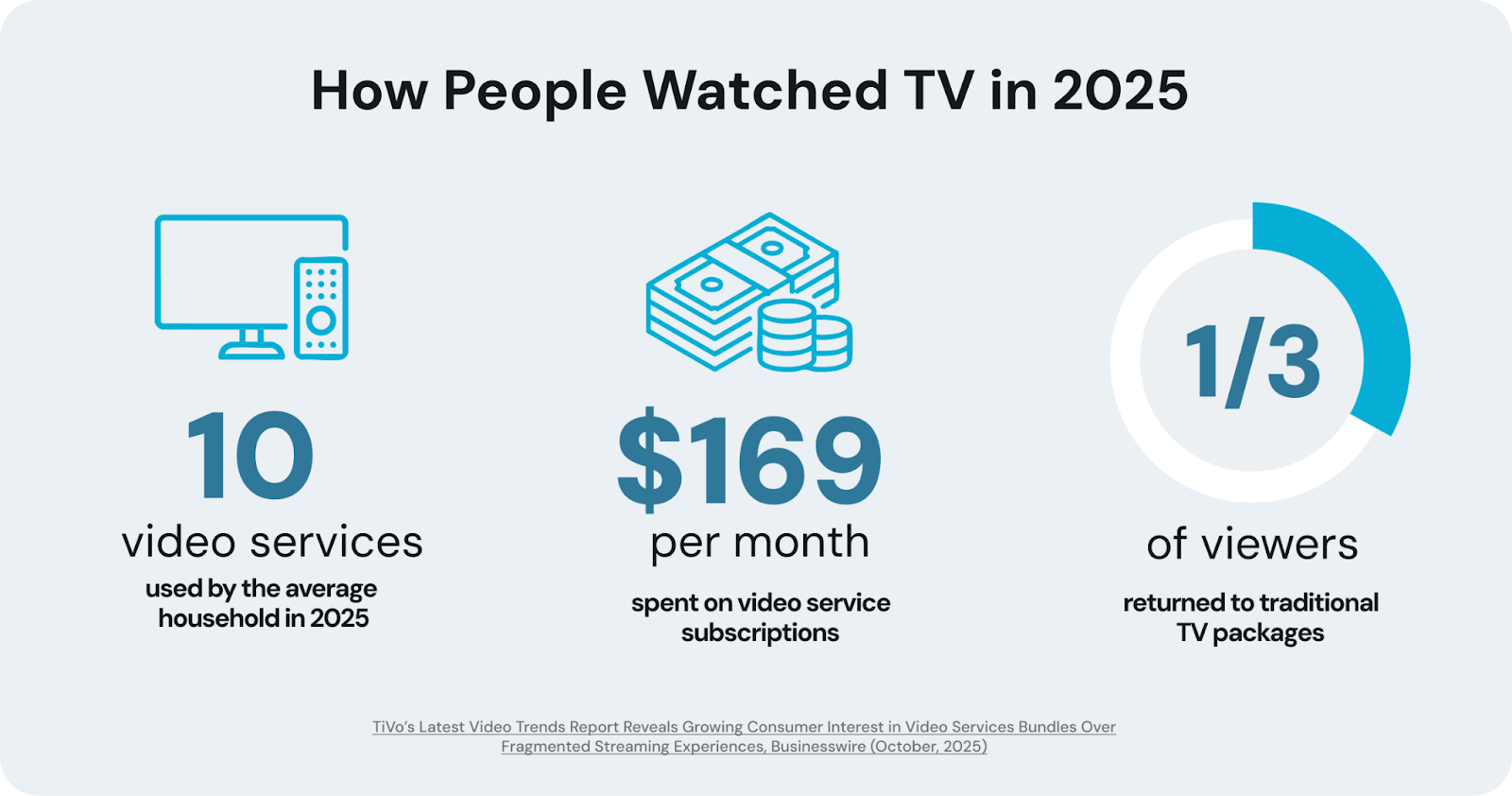
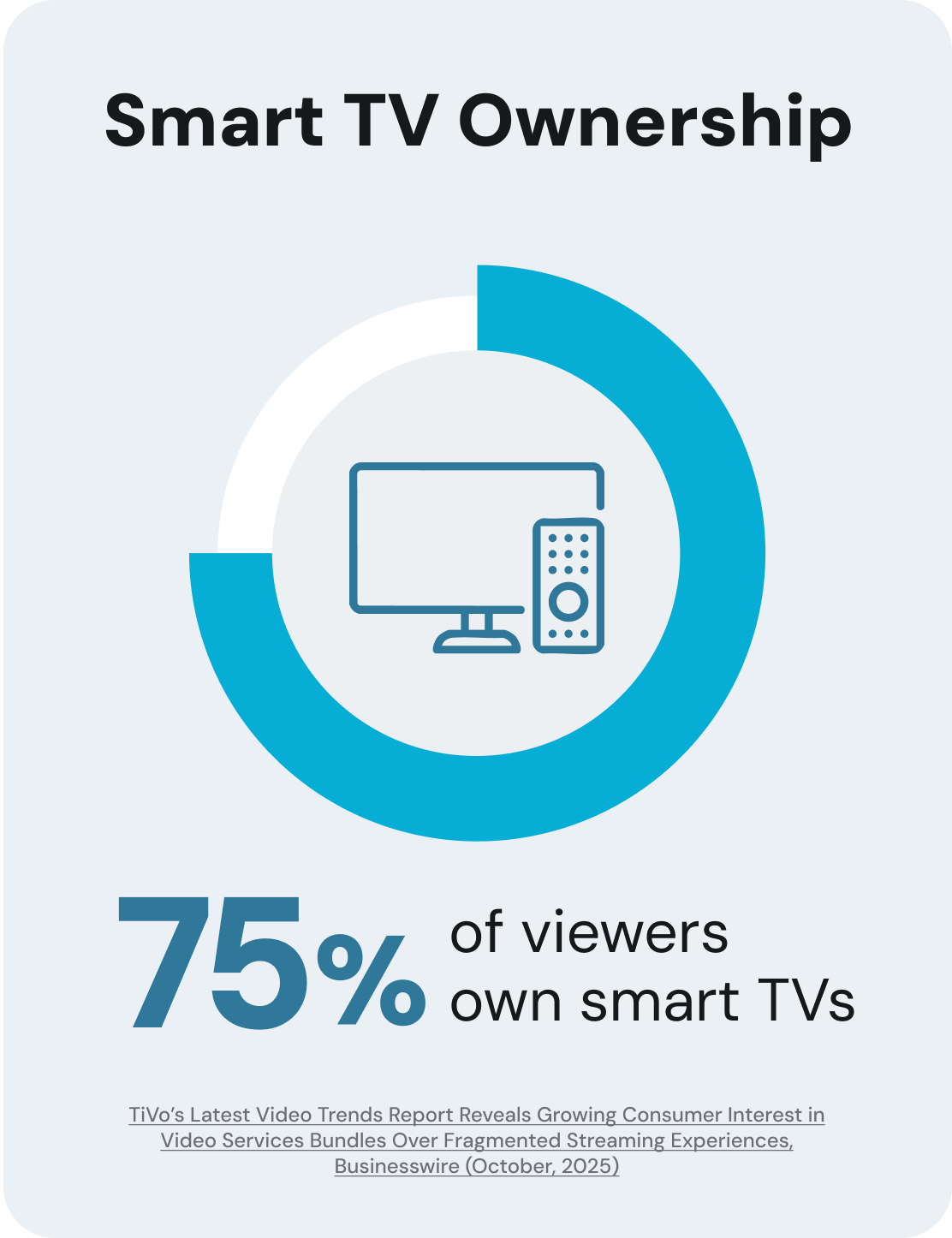
Streaming stopped feeling like an “alternative” and became the default TV experience in 2025. Most viewers assembled their own cable lineups through bundles, FAST channels, and smart TV platforms. For advertisers, that shift changed budgets and expectations.
Marketers started planning CTV alongside the rest of the performance stack. They looked for signals that resemble digital: what ran, who saw it, what they did next, and what it cost to influence that behavior.
Attention concentrated on the biggest screen. Short-form feeds still dominate in daily frequency, but high-attention time increasingly happens on TV screens where people settle in to watch. That makes CTV a different kind of inventory: high-focus, living-room attention.
Measurement pressure rose. Because it can show impact in closed-loop systems, retail media grew quickly. That created a new reference point for “proof.” As CTV’s promise became clearer, however, so did its gaps. Most teams want business outcomes faster than their attribution and data connections can reliably deliver them.
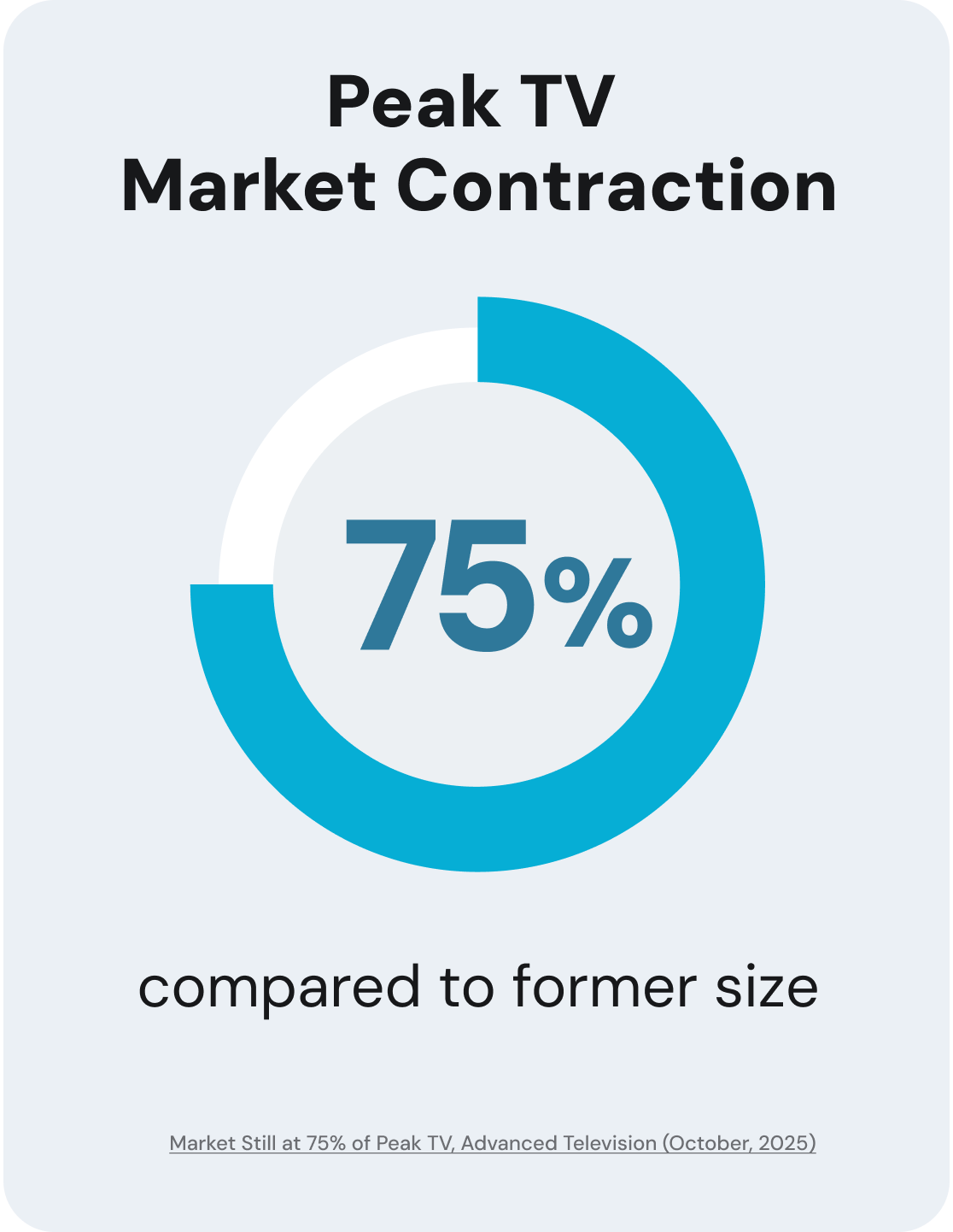
The biggest changes in 2026 are structural, affecting how media gets bought, how creative gets produced, and how success gets judged.
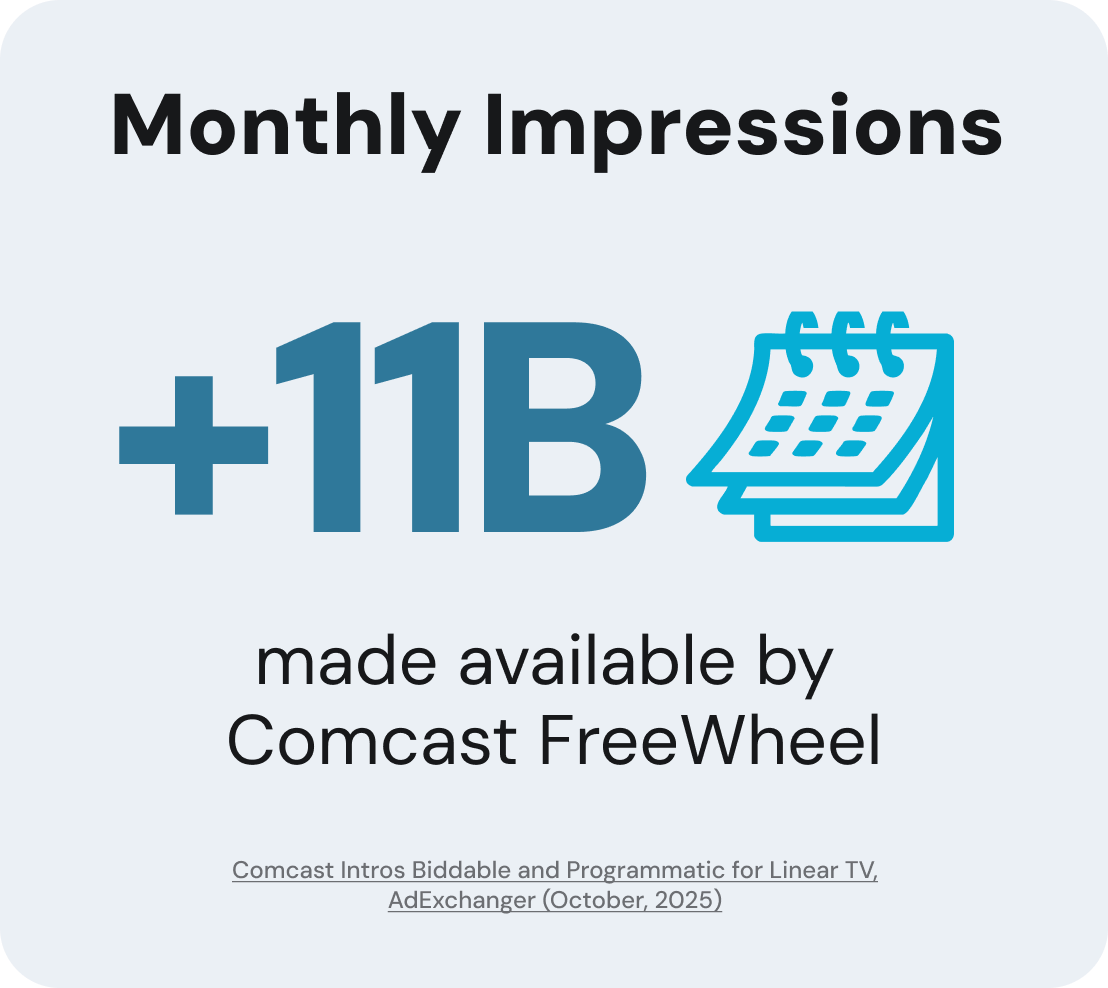
Meanwhile, programmatic infrastructure is expanding across TV and streaming environments. As more inventory flows through unified marketplaces and integrated systems, it can simplify execution.
But it also raises the bar. Most buyers now expect the same basics they demand elsewhere in digital media: transparency, supply-path control, brand safety, and fraud protection.
Many teams are reorganizing internally in response. Planning and measurement functions that used to sit in separate lanes now have to work from the same data and the same definitions of success.
The most practical impact of AI is throughput. By reducing the time and cost required to produce legitimate CTV-ready creative, new can tools make variation and testing more realistic.
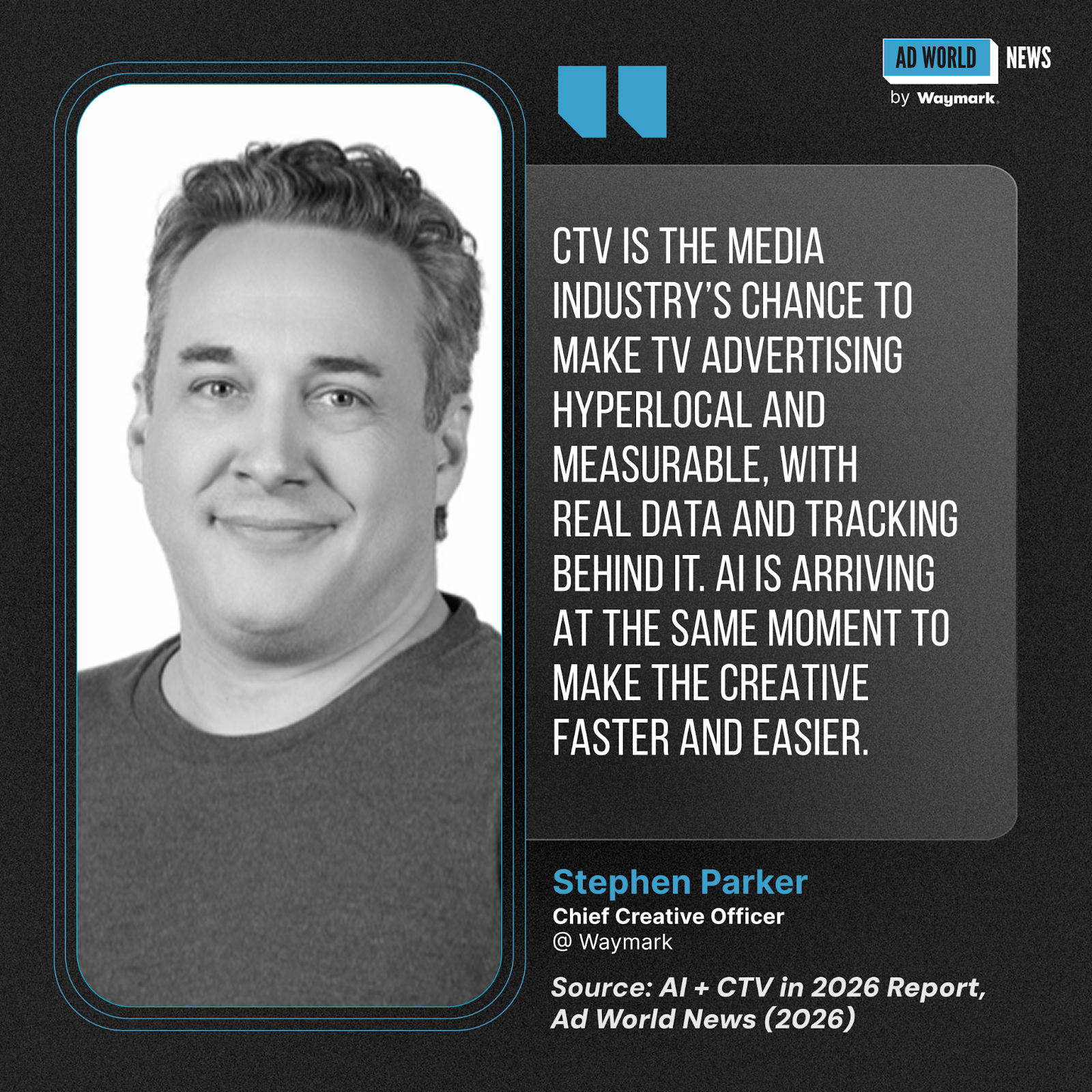
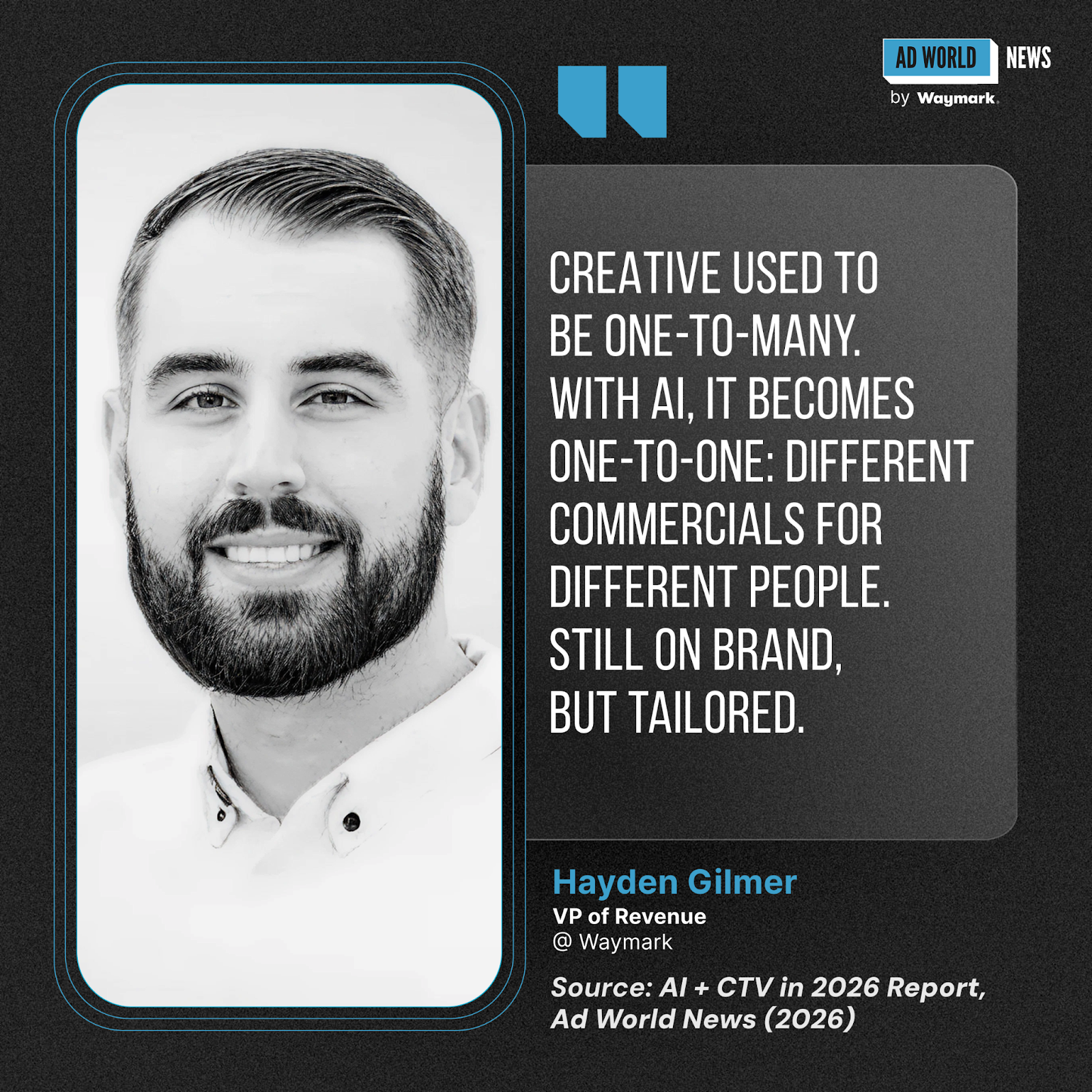
For most creative teams, that shifts the question from “Can we afford to make video?” to “Can we produce enough quality options to learn quickly without diluting the brand?” As Hayden Gilmer, VP of Revenue at Waymark, puts it, “Creative used to be one-to-many. With AI, it becomes one-to-one: different commercials for different people. Still on brand, but tailored.”
AI makes it easier to ship more, but teams still need strong ideas and tight guardrails to succeed.
As more ad dollars move toward channels that prove downstream impact, CTV must connect to the signals executives care about most. That means linking exposure to outcomes. It also means making CTV part of a longer, multi-touch journey that includes search, social, email, and retail experiences.
The strategic implication is simple: CTV campaigns that stay isolated from customer and commerce data will face more budget scrutiny. But the operational implication is more complex—modern companies need practical tools to connect CRM segments, retail signals, and CTV delivery.
Most teams already use AI somewhere in creative or media workflows. Far fewer, however, have agreed on basic standards, including when AI is acceptable, when human review is required, and how to manage brand and legal risk.
Andrea Roberts, an Industry Advisor at the Australian Centre for AI in Marketing, captures the right posture: “I see AI as a catalyst—a creative catalyst—but with humans as the real storytellers.” As AI-assisted creative moves into high-visibility environments like CTV, that mindset becomes increasingly important.

Here are the five actions for leaders to take into 2026.
Treat measurement as part of the creative brief. Define the business outcome, decide what signals you trust, and set thresholds for scale, iteration, or stop. Here, clear ownership matters more than fancy dashboards.
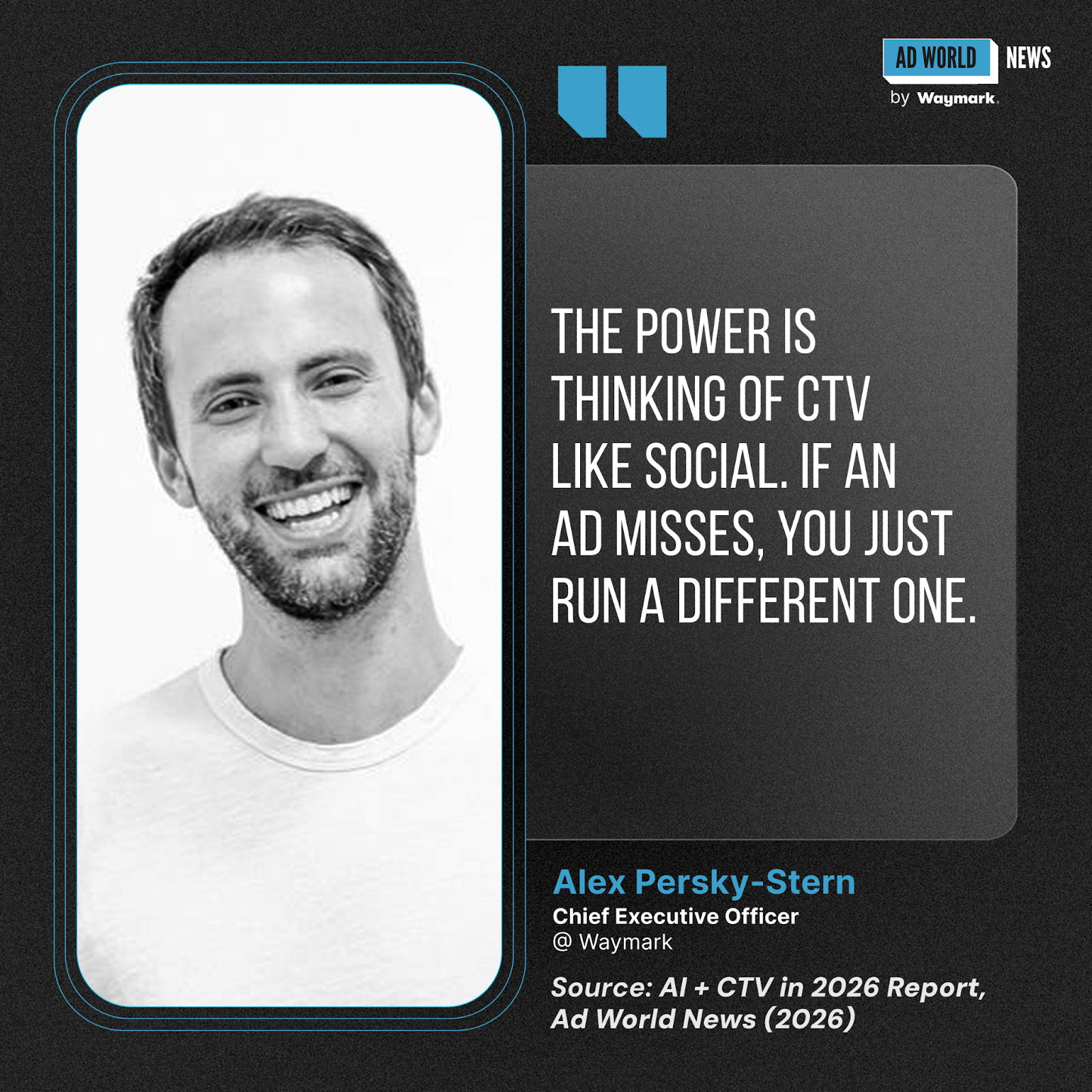
CTV belongs in the same plan as search and social, but it plays a different role. Use it to open or reinforce the story, then make response paths obvious through QR codes, short URLs, store locators, or product landing pages.
Aim for a repeatable system that generates options quickly while protecting quality. Use AI for first drafts and variations. Use humans for judgment, brand coherence, and finishing decisions. Log what works so your team reuses proven patterns.
When you tie CTV exposure to segments that matter, you can make smarter targeting and smarter creative choices. Use CRM segmentation, suppression, and outcome tracking to avoid waste and learn faster.
Set lightweight rules teams will actually follow. Define what AI can do, what it cannot do, and which reviews are mandatory before anything goes live. Track issues and update guidelines based on what happens in the real world.
Produced by Waymark and AdWorldNews.com, this editorial report draws on a mix of real-world insight and industry data.
First, we conducted interviews with practitioners across CTV and streaming, including programmatic leaders, measurement specialists, sales leaders, and AI and marketing strategists.
Then, we analyzed recent coverage and research on streaming behavior, CTV buying infrastructure, measurement trends, and AI adoption in creative and media workflows.
Finally, we compared themes across interviews and data points to identify the patterns that matter most for 2026, translating those patterns into an actionable playbook for leaders.
The AI + CTV in 2026 report is designed to help leaders plan with clarity. It lays out what changed in 2025, what’s new in 2026, and what disciplined teams will do next across measurement, creative, data, and governance.
Download the full AI + CTV in 2026 report.
Get Started
With our instant setup and easy-to-use tools, the only thing you’ll miss is the frustration of traditional ad production.